Packing for Toubkal is about one thing: being comfortable from a warm afternoon in Imlil to a freezing dawn on a 4,167 m summit, all in the same 24 hours. Get it wrong and you will either carry too much up the Mizane valley or shiver on the summit ridge. This guide is our tested answer to what to pack for Toubkal, season by season.
On a guided trek, mules carry the main bags to the refuge, so you only walk with a daypack. That changes how you pack, and it is the first thing to understand.
How luggage works on a Toubkal trek
On our treks, a muleteer loads your main bag in Imlil and it meets you at the refuge or the night's gîte. You walk with a 20–30 litre daypack containing water, snacks, layers and anything you need during the day. Keep the main bag soft (a duffel or rucksack, not a hard suitcase) and reasonably light; leave extra luggage in your Marrakech hotel or riad.
- Daypack: 20–30 L, with hip belt and rain cover.
- Main bag: soft, around 10–12 kg maximum is a sensible target (check with your guide).
- Left in Marrakech: city clothes, valuables you do not need, spare luggage.
What to pack for Toubkal: the essential checklist
| Category | Summer (Jun–Sep) | Spring / Autumn | Winter (Dec–Mar) |
|---|---|---|---|
| Footwear | Broken-in trekking boots or sturdy trail shoes | Trekking boots | Stiff boots compatible with crampons |
| Base layers | Light synthetic or merino T-shirts | Long-sleeve base layer | Thermal top and leggings |
| Mid layer | Fleece | Fleece + light insulated jacket | Warm fleece + down or synthetic jacket |
| Outer layer | Windproof jacket | Waterproof shell | Waterproof shell + overtrousers |
| Head and hands | Sun hat, light gloves, warm hat for summit | Warm hat, gloves | Warm hat, buff, liner gloves + mitts |
| Technical | Trekking poles | Poles; crampons possible in early spring | Crampons, ice axe, gaiters |
| Sleeping | Light sleeping bag or liner | 3-season bag | Bag rated well below 0 °C |

Clothing: the layering system
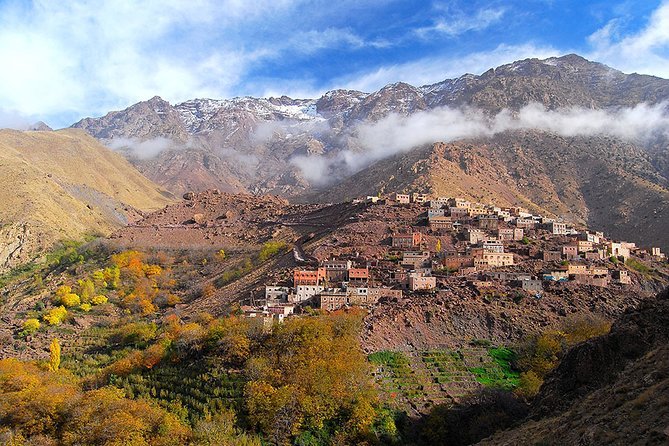
The key to Toubkal is layers you can add and remove quickly. In the morning you may leave Imlil (about 1,740 m) in a T-shirt and arrive at the refuge (around 3,200 m) needing a fleece. On summit morning you start in the dark in every layer you own, then peel them off as the sun rises.
- 2–3 quick-drying T-shirts or base layers (avoid cotton, which stays wet).
- 1 pair of trekking trousers and 1 pair of warm leggings for evenings.
- 1 fleece and 1 insulated jacket; in summer the jacket can be light.
- 1 waterproof and windproof shell jacket.
- Hiking socks (3 pairs) and a warm pair for sleeping.
- Modest clothing for the villages: shoulders and knees covered is appreciated.
Gear and accessories
- Trekking poles: they save your knees on the long descent.
- Headlamp with spare batteries for the pre-dawn summit start.
- Sunglasses (category 3 or 4), sunscreen SPF 50 and lip balm.
- Reusable water bottles (2 litres total) and water purification tablets or a filter.
- Small first-aid kit: blister plasters, personal medication, painkillers.
- Toilet paper, hand sanitiser and a small bag to carry rubbish back down.
- Cash in dirhams for drinks, tips and equipment rental in Imlil.
- Power bank: charging at the refuge can be limited or paid.
Food and water on the trail
On a guided trek, meals are provided by the cook or the refuge, typically tagine, couscous, soup, bread and plenty of mint tea. What you should bring are your favourite snacks: nuts, dried fruit, energy bars or chocolate for the summit day, when appetite is often low at altitude. Bottled water and soft drinks can be bought along the trail, including at Sidi Chamharouch, but prices rise as you climb. A filter or tablets reduce plastic waste.

How to pack your bags in 6 steps
- Check the season and the forecast a week before; adapt the winter or summer column above.
- Lay out every item and remove anything you will not use twice.
- Put the daypack essentials aside: water, snacks, shell jacket, fleece, hat, gloves, sun cream, headlamp, first-aid kit.
- Pack the main bag in dry bags so clothes stay dry if a mule crosses a stream or it rains.
- Weigh the main bag and keep it reasonable for the mule.
- Wear your boots on the drive to Imlil so they are ready and not taking space.
What not to bring
Leave behind hard suitcases, heavy cotton clothes, jeans, excessive electronics and anything valuable you would hate to lose. Drones need special authorisation in Morocco, so check before bringing one. And remember that the High Atlas is a living landscape: everything you carry up should come back down.
Packing for your specific trek
Your list depends on the itinerary. For the 2-day Toubkal summit trek, travel as light as possible. For the 4-day trek through Berber villages or the 6-day Toubkal circuit, add a change of clothes and a few extra socks. Our team sends a packing reminder after booking any of our guided Toubkal treks. If you are going in the cold months, read our guide to Toubkal in winter for the extra technical gear.
For outdoor clothing advice in general, the British Mountaineering Council publishes useful guidance on layering and mountain safety.
Packing for children and teenagers
Families sometimes combine a short Toubkal trek or a valley hike with a holiday in Marrakech. Children feel the cold faster than adults and tire more quickly, so pack an extra warm layer, a spare pair of gloves and a few favourite snacks for them. A small, light daypack gives them a sense of responsibility without slowing them down. For younger children, a day hike in the Imlil valley is often a better choice than the summit.
Electronics and photography
Phone batteries drain quickly in the cold, especially on summit morning. Keep your phone in an inside pocket close to your body and carry a fully charged power bank. If you bring a camera, pack a spare battery and a soft cloth to clean the lens of dust. Offline maps and a downloaded copy of your booking confirmation are useful, because the phone signal can be patchy in the upper valley. Respect people's privacy in the villages and on the trail, and always ask before photographing muleteers or families.
Documents and money
- Passport or a copy of it: guides and refuges may record trekkers' details.
- Travel insurance details that cover trekking at altitude.
- Cash in dirhams in small notes; card payments are rarely possible above Imlil.
- Emergency contact numbers written on paper, in case your phone runs out of battery.
With these items in a small waterproof pouch at the top of your daypack, you are ready for anything the mountain brings.
Key takeaways
- Pack layers: base, fleece, insulated jacket and windproof shell.
- Walk with a 20–30 L daypack; mules carry the soft main bag.
- Headlamp, sunglasses, sun cream and poles are essential in every season.
- In winter, add crampons, an ice axe and a sub-zero sleeping bag.