Choosing the right month changes everything on Jebel Toubkal: the same trail that is a sunny mountain walk in June becomes a snow-and-ice ascent in February. If you are wondering about the best time to climb Toubkal, the short answer is late spring and early autumn, but the right choice depends on your experience, your tolerance for cold and what you want to see on the way up.
This guide, written by our team from Imlil, walks through the Toubkal seasons month by month, explains what changes on the mountain and helps you match a season to the right itinerary.
When is the best time to climb Toubkal?
For most walkers, the best time to climb Toubkal is April to June and September to October. In these months the trail from Imlil to the refuge is usually clear of deep snow, daytime temperatures are pleasant in the valleys, and the summit at 4,167 m is cold at dawn but manageable with proper layers.
- Spring (April–June): green valleys, walnut trees in leaf, snowmelt streams and occasional late snow patches high up.
- Summer (July–August): snow-free and stable, but hot and busy in the lower valleys; afternoon storms are possible.
- Autumn (September–October): clear air, good visibility and fewer crowds; the first snow can arrive late October.
- Winter (December–March): a true winter ascent requiring crampons, an ice axe and an experienced guide.
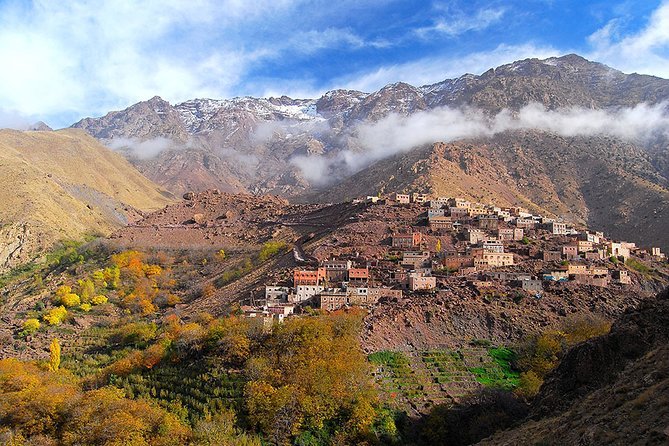
Toubkal month by month
Weather in the High Atlas varies from year to year, so treat the table below as approximate guidance rather than a forecast. Always check conditions with your guide a few days before departure.
| Period | Typical conditions (approx.) | Snow on the summit route | Who it suits |
|---|---|---|---|
| January–February | Coldest months; summit often well below freezing, strong wind | Usually yes, often icy | Experienced winter walkers with full equipment |
| March | Changeable; heavy snow possible, longer days | Usually yes | Fit walkers comfortable with crampons |
| April–May | Mild valleys, cold nights at the refuge | Patches, decreasing | Most fit beginners; check snow at the start of April |
| June | Warm, long days, very stable | Rarely | First-time trekkers, families with teenagers |
| July–August | Hot in Imlil, cool on top; busiest season | No | Anyone avoiding snow; start early to beat the heat |
| September–October | Clear skies, cooler air, quieter trail | Rarely until late October | Photographers and walkers wanting calm |
| November–December | Short days, first serious snowfalls | Increasingly yes | Experienced walkers; winter gear needed |
Climbing Toubkal in spring and summer
Spring is when the High Atlas looks its best. Barley terraces around Imlil and Aroumd are green, the Mizane valley streams are full and the villages are lively. Early April can still bring a winter feel above the refuge, so a guide may recommend crampons for the final slopes. From mid-May, most groups walk the whole route in trekking boots.
Summer is the most reliable period for a snow-free summit. The trade-off is heat: Marrakech can be very hot and the walk out of Imlil is best started early. At the summit, even in August, a windproof jacket and warm hat are essential because the temperature at dawn can drop close to freezing.
Autumn: the quiet favourite of local guides
Many of our guides consider September and October the most pleasant time on the mountain. The light is sharp, haze from the summer heat has gone and the views from the summit stretch towards the Anti-Atlas and, on very clear days, the edge of the Sahara. The trail and refuges are calmer than in summer, and walnut and apple harvests make the villages especially interesting.
From late October onwards, keep an eye on the forecast: an early storm can put fresh snow on the summit ridge. If you want an unhurried autumn trek with time to see the Berber villages, the 4-day Toubkal and Berber villages trek uses quieter valleys on the way in.
Is winter a good time to climb Toubkal?
Winter is a different expedition. From roughly December to March, the upper slopes are typically covered in snow and ice, temperatures at the summit can fall far below zero and wind chill is serious. A winter ascent is very rewarding for experienced walkers, but it requires crampons, an ice axe, proper insulated clothing and a guide used to winter conditions. We cover this season in detail in our guide to climbing Toubkal in winter.

How to choose your dates in 5 steps
- Decide on snow or no snow. If you have never used crampons, aim for May to October.
- Check religious holidays and school holidays. Summer weekends and European school holidays are busier at the refuge.
- Pick your itinerary length. In cooler months, an extra night helps acclimatisation and gives a weather buffer.
- Look at the moon and daylight. Summit pushes start before dawn; longer days in May–June give more margin.
- Confirm with your guide one week before. Local guides know when snow lingers in the couloirs below the summit.
Which Toubkal trek fits which season?
In summer and early autumn, the fast 2-day Toubkal summit trek from Marrakech works well for fit walkers with limited time. In spring, or for anyone worried about altitude, the 3-day Toubkal trek via Imlil adds a night that noticeably improves comfort. For a longer mountain experience, the 6-day Toubkal circuit with Lake Ifni is best between May and October when the high passes are open. You can compare all options on our Toubkal treks page.
Unsure how long you need? Read our comparison Toubkal in 2 or 3 days.
Practical tips for any season
- Bring layers: valley temperatures and summit temperatures can differ by more than 20 °C on the same day.
- Start the summit day early (often around 4–5 am) to enjoy firm ground and calm air.
- Drink regularly and walk slowly above 3,200 m; altitude affects everyone differently.
- Carry sun protection all year: UV is strong at altitude, and snow reflects it in winter.
- Respect village life in Imlil and Aroumd: dress modestly and ask before photographing people.
Toubkal lies inside Toubkal National Park, created in 1942. For background on the mountain itself, see the Toubkal entry on Wikipedia.
Key takeaways
- The best time to climb Toubkal for most people is April–June and September–October.
- July and August are snow-free but hot and busy; start early.
- December to March is a winter ascent that needs crampons, an ice axe and an experienced guide.
- An extra night (3 days instead of 2) improves acclimatisation in every season.

