Toubkal is not Everest, but at 4,167 m it is high enough for altitude to matter. Every season we see strong, fit walkers slowed down by a headache at the refuge, and less athletic trekkers who reach the summit easily because they took it slowly. Understanding altitude sickness on Toubkal is one of the best ways to improve your chances of a safe, enjoyable ascent.
This article gives general information from our experience as mountain guides. It is not medical advice: if you have a health condition, or any doubt, talk to your doctor or a travel medicine clinic before the trek.
Can you get altitude sickness on Toubkal?
Yes. Acute mountain sickness (AMS) can affect people from around 2,500 m, and the Toubkal ascent goes from Marrakech (about 450 m) to Imlil (about 1,740 m), the refuge (about 3,200 m) and the summit (4,167 m) within one or two days. That is a fast gain. Most trekkers feel at least some effect, such as breathlessness or a mild headache; a minority feel properly unwell.
Fitness does not protect you. Altitude affects people differently, and the same person can react differently on different trips.
Altitudes on the Toubkal route
| Point | Altitude (approx.) | What you may notice |
|---|---|---|
| Marrakech | 450 m | Nothing |
| Imlil | 1,740 m | Usually nothing; slight breathlessness on climbs |
| Sidi Chamharouch | 2,350 m | Heavier breathing, slower pace |
| Toubkal refuges | 3,207 m | Possible headache, poor sleep, low appetite |
| Summit | 4,167 m | Shortness of breath, fatigue; symptoms can increase |

Common symptoms to watch for
Mild AMS often feels like a hangover. Typical signs include:
- headache, the most common symptom;
- nausea or loss of appetite;
- unusual tiredness or weakness;
- dizziness or light-headedness;
- difficulty sleeping at the refuge.
More serious warning signs, such as confusion, loss of coordination, breathlessness at rest or a persistent cough, need immediate attention and descent. Tell your guide about any symptom early; it is never a sign of weakness.
How to reduce the risk: 6 practical steps
- Choose a slower itinerary. The 3-day Toubkal trek gives an extra night compared with the 2-day summit trek.
- Walk slowly. Your guide's steady pace is deliberate. You should be able to talk while walking.
- Drink regularly. Dehydration makes symptoms worse; aim for small sips throughout the day.
- Eat, even without appetite. Carbohydrates help: bread, rice, couscous, snacks.
- Avoid alcohol before and during the trek, and sleep as well as you can before arriving.
- Talk to your doctor before the trip about preventive options if you have had altitude problems before.
What our guides do if someone feels unwell
Our guides know the route and recognise the signs. If a trekker feels unwell, the usual approach is to rest, drink, eat and watch how symptoms evolve. If symptoms worsen or do not improve, the safest response is to descend, even a few hundred metres, which usually brings relief. The guide may decide to stop the summit attempt; on the mountain, the guide's decision is final, and it is always made for your safety.
Longer treks and acclimatisation
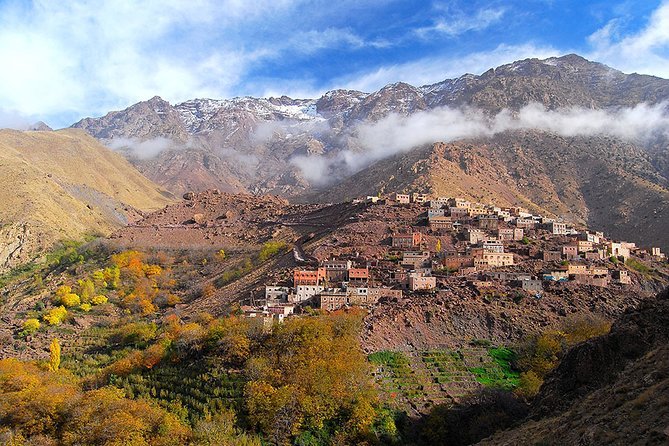
The best natural protection is time. Longer routes such as the 4-day Toubkal and Berber villages trek or the 6-day Toubkal circuit climb more progressively, with nights at intermediate altitudes before the summit. They are ideal if you are worried about altitude or have felt symptoms on previous trips. Compare all options on our Toubkal treks page, or read our 2-day vs 3-day Toubkal comparison.
Who should take extra care?
- People who have had altitude sickness before.
- Anyone with heart, lung or blood pressure conditions, or who is pregnant: seek medical advice first.
- Children and teenagers: they may not express symptoms clearly.
- Travellers arriving in Morocco the day before with little sleep.
For a reliable overview of altitude illness, see the NHS page on altitude sickness, and consult a health professional for personal advice.
Why the Toubkal ascent is fast in altitude terms
Mountain medicine guidelines generally recommend that above around 3,000 m, the altitude at which you sleep should increase gradually from one night to the next, with rest days built in. On a standard Toubkal ascent, you leave Marrakech at about 450 m, sleep at the refuge at around 3,200 m the same evening and climb to 4,167 m the next morning. In altitude terms, that is a rapid gain, which explains why so many trekkers feel at least mild effects even though Toubkal is technically a straightforward walk.
This does not mean the ascent is dangerous for most healthy people, but it does mean that pace, rest and listening to your body matter more than on a lower trek. Spending a night in Imlil or in a village before going up to the refuge is a simple way to make the ascent more gradual.
Sleep and altitude
Many trekkers sleep poorly at the refuge. Breathing can feel irregular at night, you may wake up often, and the excitement of the summit adds to it. This is common and not necessarily a sign of illness. Rest even if you do not sleep: lie down, stay warm and drink some water. If you wake up with a headache that does not ease with rest, water and a light breakfast, tell your guide before leaving for the summit.
Tips from our guides
- Follow the guide's rhythm, even if it feels too slow at first; it pays off higher up.
- Take short, regular breaks rather than long stops where you get cold.
- Eat a little at each break, even when you are not hungry.
- Keep warm: being cold makes you more tired and less comfortable at altitude.
- Be honest about how you feel; guides adapt the plan every day.
Above all, remember that the summit is optional and coming back down is not. Turning around is part of mountain culture, and Toubkal will still be there for another trip.
Key takeaways
- Altitude sickness on Toubkal is common in a mild form; fitness does not prevent it.
- Go slowly, drink, eat and choose 3 days or more when possible.
- Tell your guide about symptoms early; descending is the main remedy.
- This is general information: consult your doctor before the trek if in doubt.